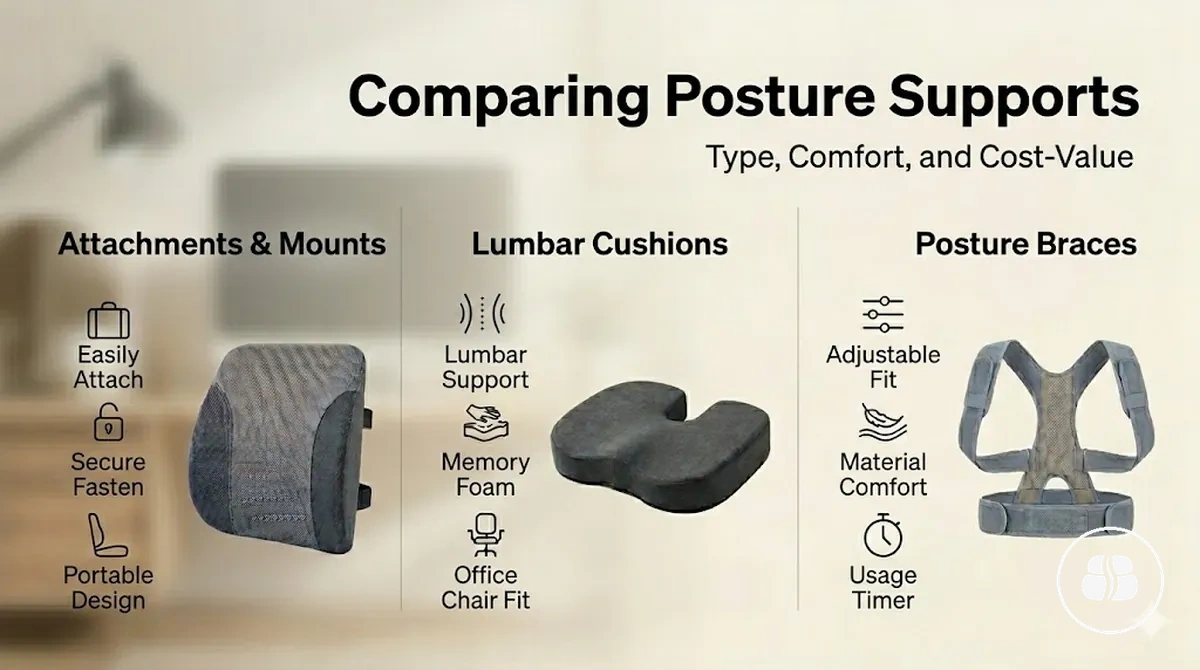
Posture support accessories comparison for type, comfort, and value
Posture support accessories comparison refers to a structured evaluation of different support accessory types based on how they influence posture, comfort behavior, support level, and overall cost-value. It focuses on understanding how posture correctors, back braces, lumbar support, cushions, and chair-based supports perform across different usage conditions. The comparison is not fixed to a single outcome and depends on how each accessory aligns with specific user needs and contexts.
Comparison depends on use-case, comfort tolerance, support level, and cost-value differences across posture corrector, back brace, lumbar support, cushion, and chair support categories. It helps clarify that no single posture support accessory performs the same in every situation or for every user. Posture support accessories hub provides the broader category context where these comparison relationships are structured within the overall system.
Different usage scenarios change how posture support accessories are evaluated. A desk worker with long sitting hours may prioritize steady lumbar support, while a user with intermittent standing tasks may focus on lighter posture cues and flexibility. Comfort tolerance also shifts the outcome, as some users may prefer less restrictive designs while others may accept firmer support for stability. These variations show why comparison must account for context rather than a single fixed benchmark.
Users often misinterpret posture support accessories by focusing on isolated attributes such as firmness or material instead of the full support structure. This can lead to incomplete evaluation of how comfort, support strength, and cost-value interact in real use conditions. A structured comparison approach helps align these factors so that each accessory type is understood based on its functional role rather than a single feature.
Comparison criteria for posture support accessories
Comparison criteria for posture support accessories depend on support purpose, posture context, comfort tolerance, adjustability, price range, and duration of use. These comparison criteria define how posture corrector, back brace, lumbar support, and cushion-based systems should be evaluated before selecting a category. Each criterion influences how well a posture support accessory aligns with real-world use conditions rather than theoretical performance.
Support needs change how posture support accessories are evaluated in daily use. Comparison criteria for posture support accessories can be organized by how the accessory interacts with sitting duration, pressure distribution, and chair dependence.
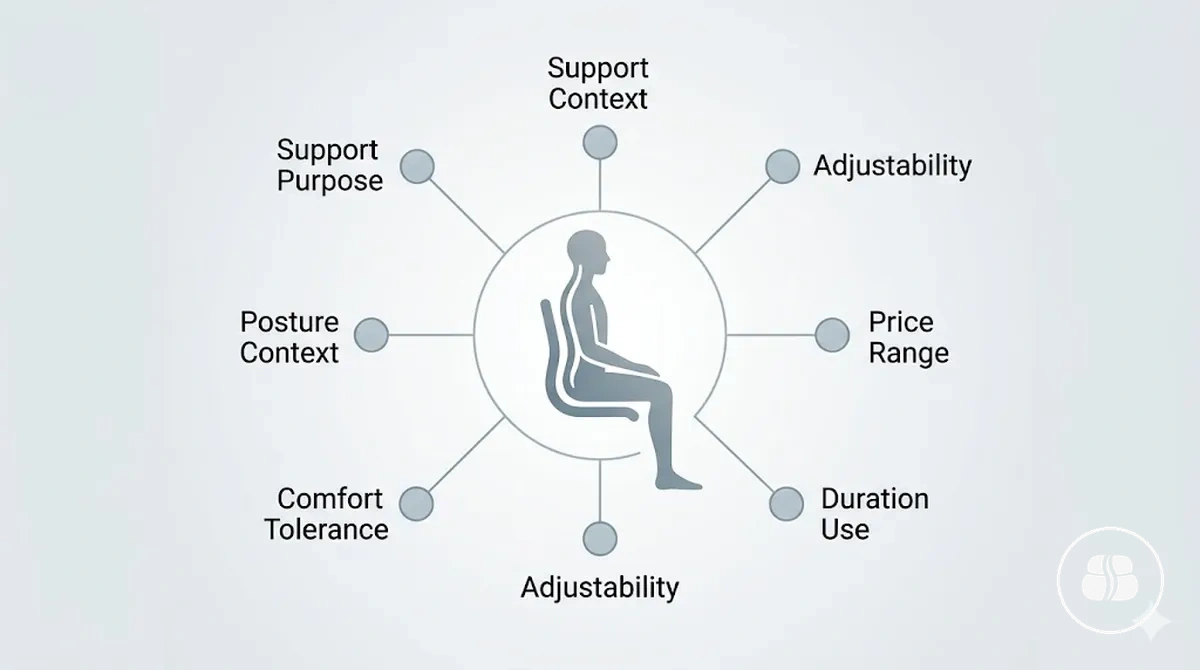
Short-term use scenarios may prioritize lighter contact and flexible adjustment, while longer sitting periods may shift attention toward stability and consistent support level. These differences show why posture context and comfort tolerance can change how the same accessory type performs, especially when price range and usage duration are factored into the evaluation.
A clear set of comparison criteria for posture support accessories helps structure evaluation before choosing between types. These criteria can be grouped into practical decision factors:
- Support purpose defines whether the accessory focuses on posture alignment, lumbar relief, or general back support.
- Posture context determines how sitting, standing, or movement patterns influence the required support level.
- Comfort tolerance affects how much pressure or firmness can be sustained during extended use duration.
- Adjustability impacts how well the accessory adapts to different body shapes and seating positions.
- Price range reflects frequency of use expectations and acceptable cost-value balance over time.
- Duration of use shapes whether lightweight intermittent support or continuous support is more suitable.
Support purpose, daily context, comfort tolerance, and price range
Daily use conditions shape how posture support accessories are evaluated because support purpose, comfort tolerance, and usage setting can shift in importance across different routines. This makes daily context a key variable when comparing posture support accessories within real-world conditions rather than fixed assumptions.
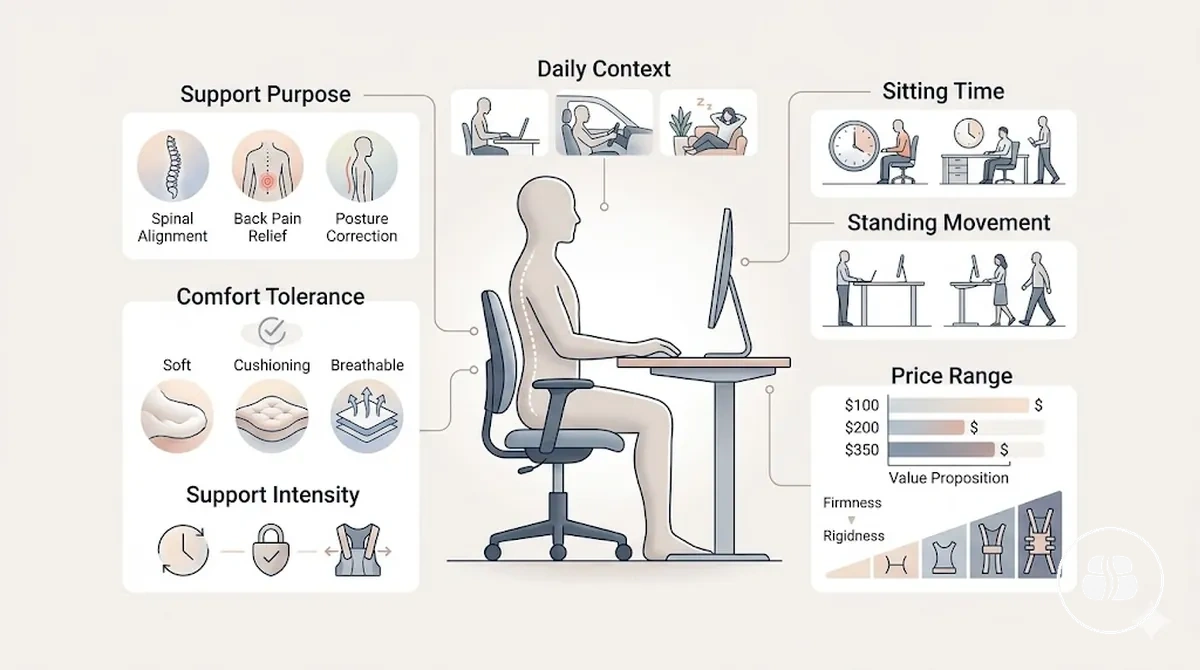
Support purpose and posture context define what the accessory is expected to do, while comfort tolerance and price range influence how practical that choice remains over time. These factors often change weight depending on whether the use involves long sitting time or frequent standing movement during the day.
In shorter sitting time scenarios, lighter support intensity and easier adjustability may be more suitable, while longer or repetitive use can shift attention toward stability and consistent support. The main trade-off often appears between comfort tolerance and support intensity, especially when daily context changes across mixed activity patterns.
- User activity determines whether posture support accessories need static support or flexible movement compatibility.
- Sitting time influences whether lightweight contact or sustained support becomes more relevant in daily use.
- Standing movement affects how restrictive or adaptable the accessory should be during transitions.
- Comfort tolerance sets limits on acceptable pressure and firmness across extended use periods.
- Budget range impacts expected durability and overall cost-value balance.
- Support intensity defines how strong or subtle the posture guidance effect should be.
Posture braces, lumbar cushions, seat pads, and chair attachments compared
Posture support accessory comparison depends on how each category distributes support across the body or seating surface and how it influences placement, adjustability, and support strength. This makes posture braces, posture correctors, lumbar cushions, seat pads, and chair attachments distinct in how they create comfort burden and structural support.
Each group changes how support is delivered during use, especially in seated or posture-alignment scenarios. A structured overview of these differences is available in the Types of posture support accessories page for broader context and category boundaries.
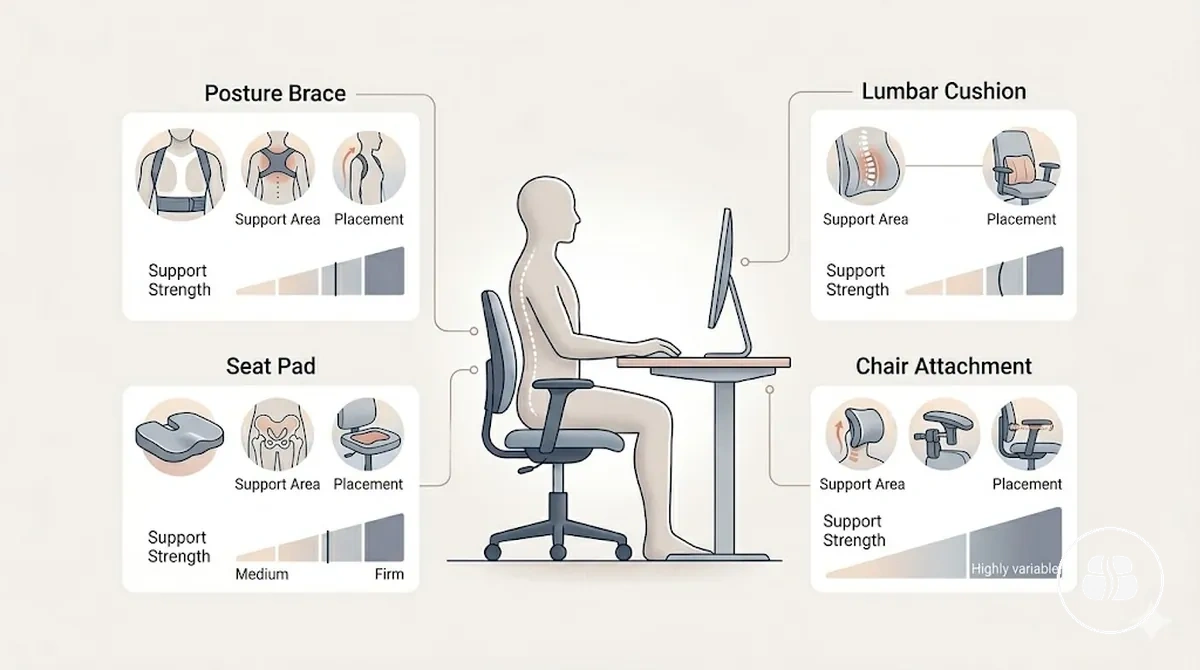
The comparison below shows how placement, body contact, and support strength vary across accessory groups. It also highlights when each category is typically considered based on usage environment and setup requirements, while keeping differences at a category level rather than product-level detail.
| Accessory group | Primary support area | Placement | Adjustability | Body contact | Support strength | Typical use context |
|---|---|---|---|---|---|---|
| Posture braces | Upper back and torso alignment | Worn on body | Moderate | High body contact | Strong alignment support | Posture correction focus |
| Posture correctors | Shoulder and upper spine positioning | Worn on body | Moderate | Medium body contact | Moderate support strength | Habitual posture guidance |
| Lumbar cushions | Lower back support | Placed on chair | Low | Indirect body contact | Localized support strength | Seated comfort support |
| Seat pads | Seat pressure distribution | Placed on seating surface | Low | Indirect body contact | Pressure relief support | Extended sitting comfort |
| Chair attachments | Back and lumbar chair integration | Attached to chair | Moderate | Medium body contact | Structural support strength | Fixed chair-based support setup |
Body-worn support versus chair-based support
Body-worn support versus chair-based support depends on how posture devices deliver correction through direct body contact or through seating surfaces, changing placement, comfort, and support strength across use conditions. Posture corrector and back brace types stay fixed to the body for active alignment, while lumbar support, seat-based cushions, and chair attachments work indirectly through sitting setup. :contentReference[oaicite:0]{index=0} This creates a clear comparison in how mobility, pressure distribution, and support consistency behave under different use conditions.
| Option | Attribute | Trade-off | Best use case |
|---|---|---|---|
| Body-worn support | Direct body alignment and higher movement sensitivity | Can feel restrictive during long wear or active motion | Posture correction and alignment training |
| Chair-based support | Indirect support through seating contact and setup | Less direct correction of posture habits | Extended sitting comfort and workstation use |
Body-worn options usually provide stronger feedback because they move with posture changes, while chair-based options prioritize steady comfort through static support surfaces. The trade-off centers on active correction intensity versus passive comfort consistency, and the better choice depends on whether the use context requires posture training or longer sitting stability.
Posture correctors versus back braces and lumbar support
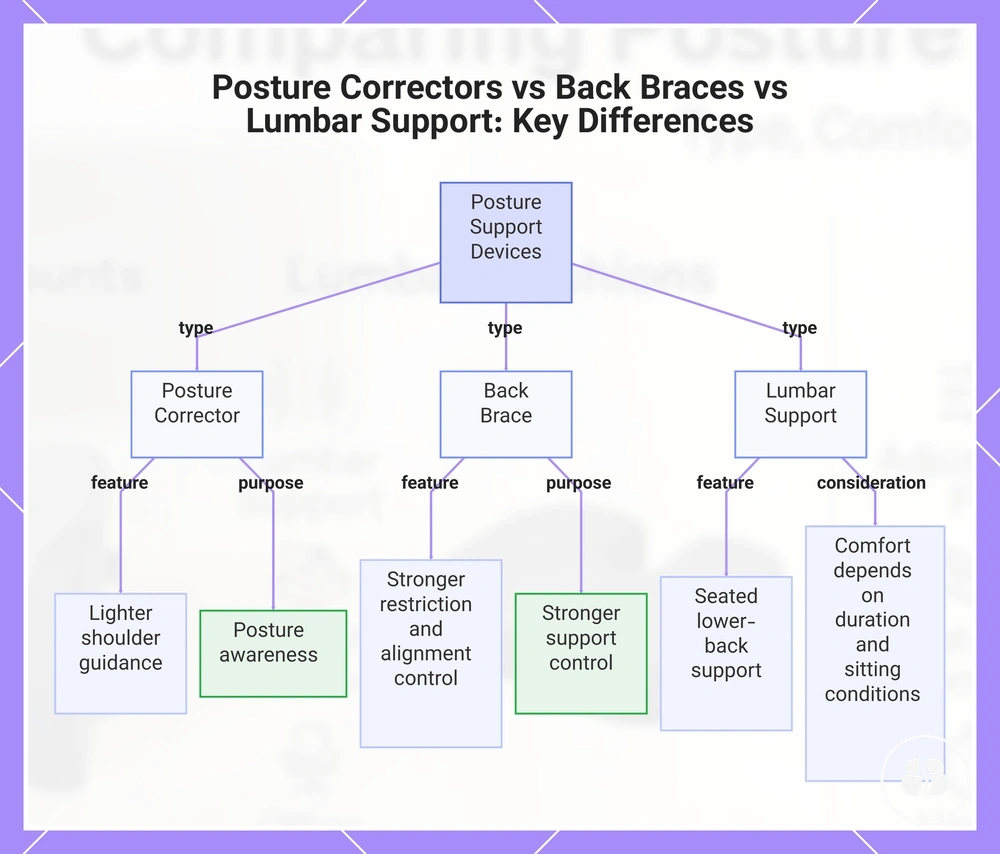
Posture correctors versus back braces and lumbar support is a comparison of support type, where posture corrector focuses on shoulder positioning and cueing, back brace emphasizes stronger restriction and alignment control, and lumbar support targets lower-back seating comfort. This comparison highlights differences in comfort, support strength, and how each posture device influences movement and sitting posture, creating a clear trade-off between active correction and passive support.
A posture corrector usually provides lighter shoulder guidance, while a back brace increases overall restriction and structural support, especially around the upper back and torso. Lumbar support works differently by focusing on seated lower-back support rather than posture cueing, which can affect comfort preference depending on use duration and sitting conditions. The decision often depends on whether the need is posture awareness, stronger support control, or improved seated comfort balance.
This chart compares three posture support devices—posture corrector, back brace, and lumbar support—highlighting their key features and primary use cases.
Comfort and wearability differences across support types
Comfort and wearability differences across support types depend on how posture corrector, back brace, and lumbar support interact with contact points, material behavior, and use duration. This comparison shows that comfort varies by restriction level, pressure distribution, and how each support type influences movement consistency. The main comparison variable is how each support option balances comfort with support strength during real use.
Comfort challenges often appear differently across daily scenarios. A posture corrector may feel lighter on the shoulders but becomes noticeable during long wear due to constant cueing. A back brace increases structural restriction, which can affect flexibility and heat buildup depending on material and fit. Lumbar support shifts the experience toward seated pressure relief, but comfort still depends on chair shape, body posture, and duration of sitting. These differences matter when choosing based on expected use time and tolerance to restriction.
The comparison below outlines comfort and wearability differences across support types in practical use conditions. It focuses on how pressure points, breathability, and movement restriction affect consistency of use rather than perceived comfort alone.
| Option | Attribute | Trade-off | Best use case |
|---|---|---|---|
| Posture corrector | Light shoulder support with moderate cueing | May create pressure at shoulders during extended wear | Short daily sessions and posture awareness |
| Back brace | High support strength with firm stabilization | Can increase heat and restrict movement over time | Longer structured support needs |
| Lumbar support | Localized lower-back seating comfort | Depends on chair design and sitting posture | Workstation sitting comfort and pressure relief |
Overall wearability depends on how much restriction a user can tolerate versus how much support strength is required in daily use. The best fit depends on balancing comfort, movement freedom, and expected duration of wear.
Pressure, breathability, concealment, and movement restriction
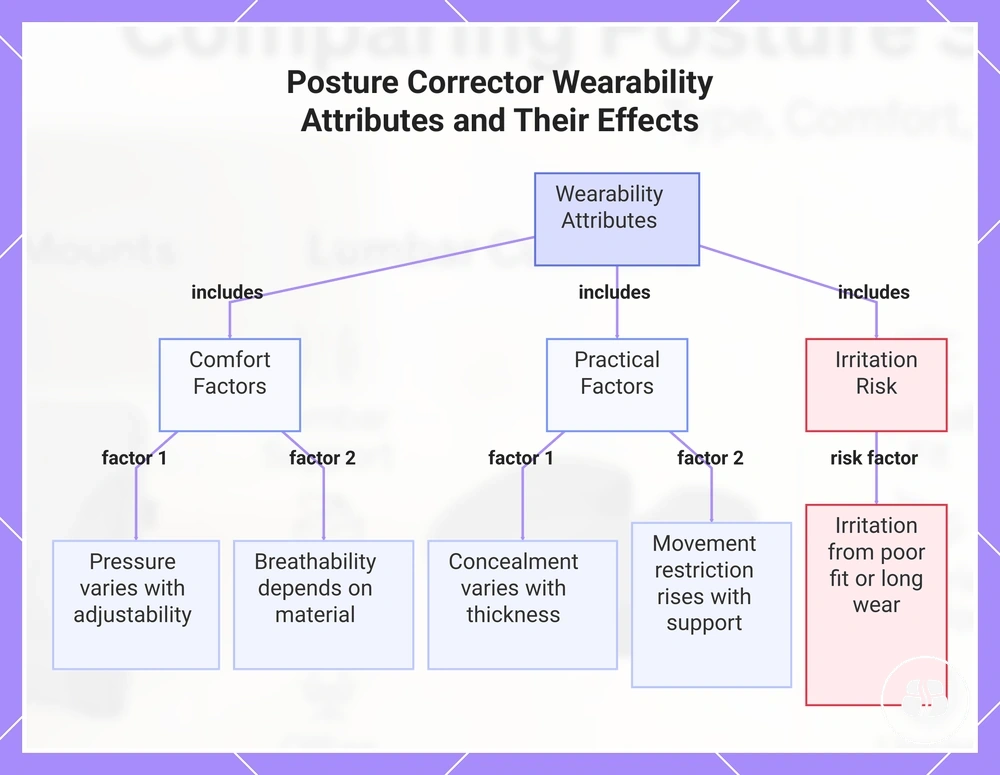
Pressure, breathability, concealment, and movement restriction define wearability attributes that affect how posture corrector, back brace, and lumbar support are experienced in daily use. These attributes influence comfort, material behavior, and support effect depending on adjustability, stability, and duration of wear. The comparison focuses on how these design factors translate into practical value and tolerance during real movement conditions.
These attributes interact differently based on use context. Strap pressure varies with feature tightness and adjustability, while breathability depends on material design and ventilation. Concealment under clothing changes with thickness and structure, and movement restriction is tied to support strength and stability level. Each attribute may influence comfort differently depending on fit and expected use duration.
- Strap pressure changes with adjustability settings, affecting comfort and stability depending on how tightly the posture device is worn.
- Fabric breathability depends on material design, influencing heat buildup and long-term comfort during extended use.
- Concealment under clothing varies with design thickness and structure, affecting practical value in daily environments.
- Movement restriction increases with higher support effect, which can reduce range of motion depending on usage conditions.
- Irritation risk may appear in cases of prolonged wear or poor fit, depending on material and contact points.
This chart shows the main wearability attributes of posture correctors, how they affect comfort and practical use, and the potential risk of irritation.
Sitting duration, standing use, and workday tolerance
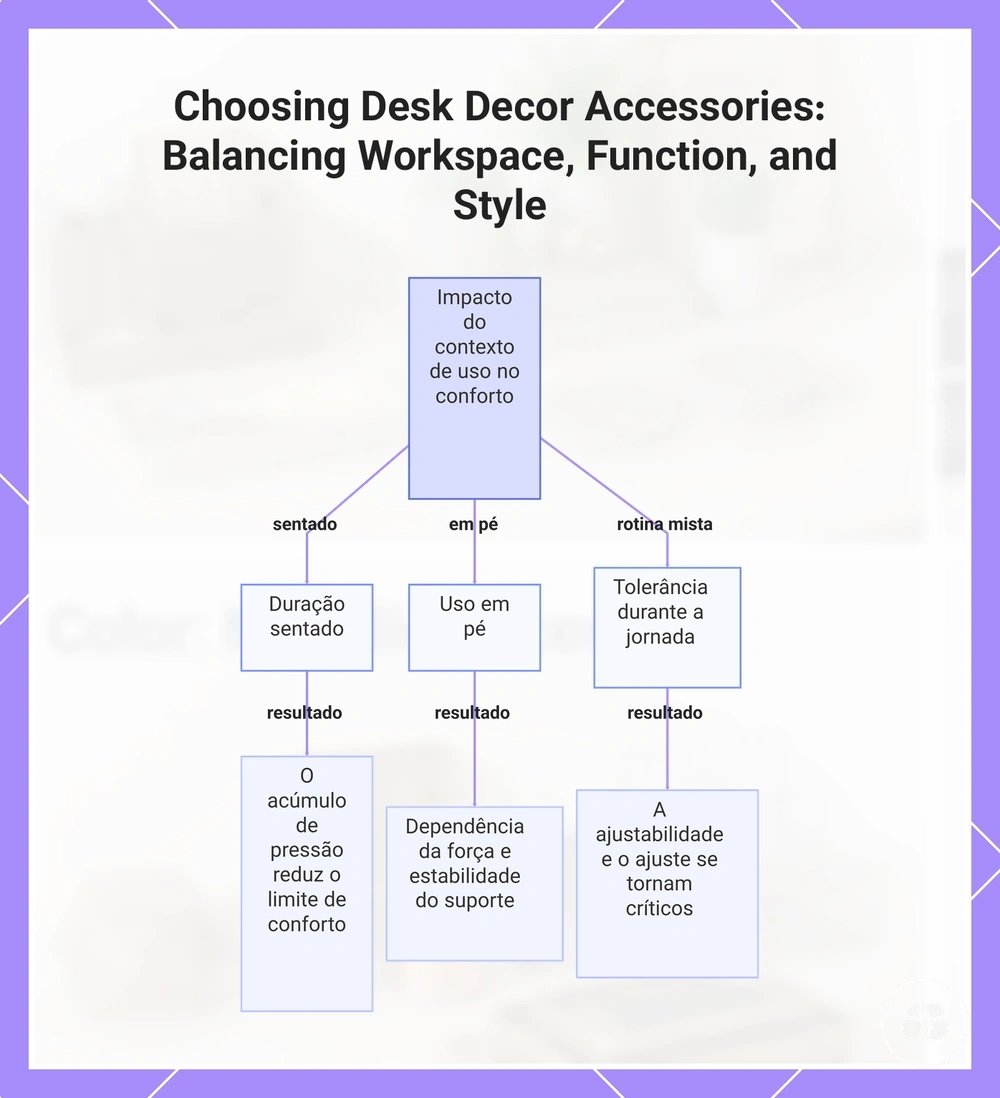
Sitting duration, standing use, and workday tolerance define how use context changes comfort comparison across posture corrector, back brace, and lumbar support. These contexts influence support type behavior because sitting, standing, and mixed movement place different demands on stability, adjustability, and comfort limits. The comparison depends on how each use context affects tolerance rather than assuming a fixed wear pattern. :contentReference[oaicite:0]{index=0}
Different use contexts create different pressure and fatigue patterns. Sitting duration tends to increase comfort constraints over time, while standing use shifts focus toward stability and posture support effect. Mixed movement or intermittent wear introduces variability in fit and restriction, making comfort depend more on adjustability and material response under changing conditions.
- Sitting duration: Prolonged seated use may increase pressure buildup and reduce comfort limit depending on cushion support and lumbar alignment.
- Standing use: Active posture conditions may increase reliance on support strength and stability, affecting movement flexibility.
- Workday tolerance: Mixed routine use can create shifting comfort conditions where adjustability and fit become more important for consistent usability.
This chart shows how sitting duration, standing use, and workday tolerance create different comfort demands for posture correctors, back braces, and lumbar supports.
Support strength and posture feedback by accessory type
Support strength and posture feedback by accessory type depends on how each posture device delivers correction through passive support, active cueing, or firmer restriction. This comparison separates support type behavior into distinct levels because comfort and support strength are not identical, and each accessory produces a different feedback pattern based on adjustability, fit, and structural design. The main comparison variable is how strongly each option influences posture behavior rather than comfort alone.
Posture correctors typically provide lighter cueing that reminds alignment through tension, while back braces introduce firmer restriction that increases structural stability. Lumbar support focuses on seated lower-back support rather than full-body correction, and pads or chair attachments mainly redistribute pressure with indirect posture influence. The trade-off depends on whether the use context requires gentle feedback or stronger restriction under different comfort limits and expected use duration.
The comparison below shows how support strength varies across accessory types and how posture feedback changes from passive to active across use contexts.
| Option | Attribute | Trade-off | Best use case |
|---|---|---|---|
| Posture corrector | Light cueing with shoulder alignment feedback | Lower restriction may reduce structural support strength | Gentle posture awareness in short or light use contexts |
| Back brace | Firm restriction with stronger stabilization | Higher restriction may reduce movement flexibility | Stronger posture support during extended sitting or standing use |
| Lumbar support | Localized lower-back seating support | Limited full-posture feedback capability | Seated comfort and lumbar alignment support |
| Seat pads | Pressure redistribution with indirect posture effect | Minimal active posture correction effect | Comfort-focused sitting support |
| Chair attachments | Integrated seating support structure | Effect depends on chair compatibility and setup | Workstation seating stability and long-duration comfort |
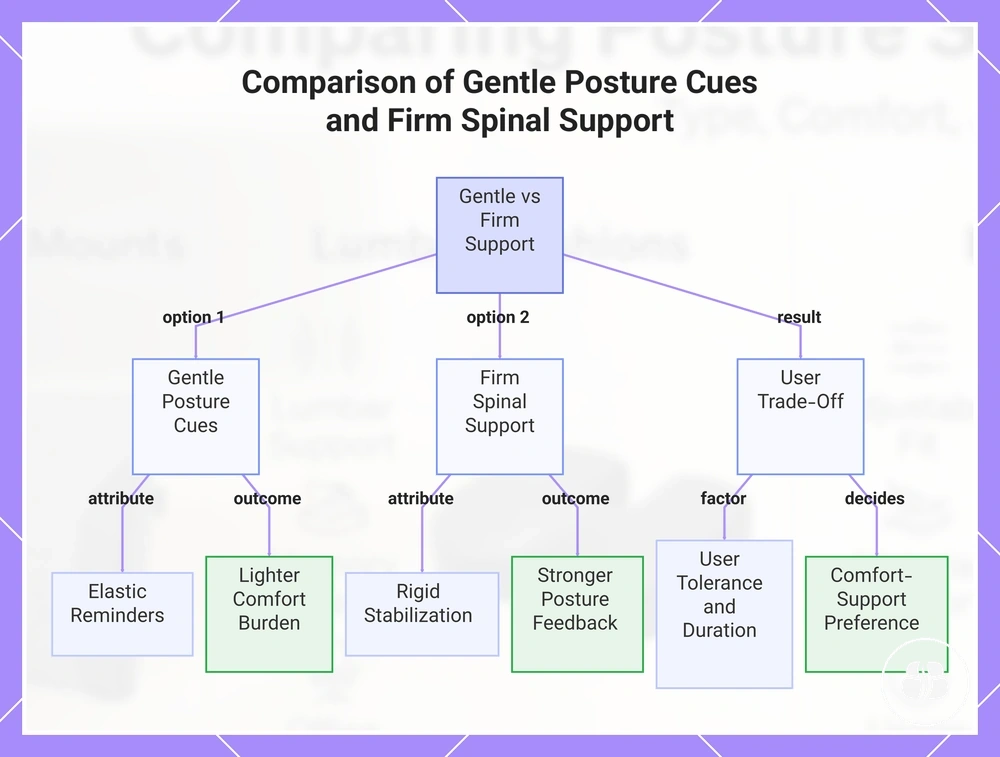
Gentle posture cues versus firm spinal support
Gentle posture cues versus firm spinal support is a comparison of support type that separates light alignment reminders from stronger structural restriction across posture corrector, back brace, and lumbar support options. The distinction depends on how each posture device delivers support strength through either elastic cueing or rigid stabilization. This local comparison condition is shaped by user tolerance and expected use duration.
- Gentle cues rely on elastic reminders and shoulder positioning with lower support strength and lighter comfort burden.
- Firm spinal support uses brace rigidity and lumbar contouring with higher restriction and stronger posture feedback.
The contrast shows how posture corrector designs tend to prioritize subtle cueing, while back brace structures increase restriction and stability, and lumbar support focuses on seated contour support rather than full-body correction. The trade-off between comfort and support strength depends on whether the user prefers lighter posture awareness or more structured alignment feedback under different use conditions.
This chart compares gentle posture cues and firm spinal support, showing their core features and the trade-off between comfort and support strength.
Short-term relief, habit support, and over-reliance risk
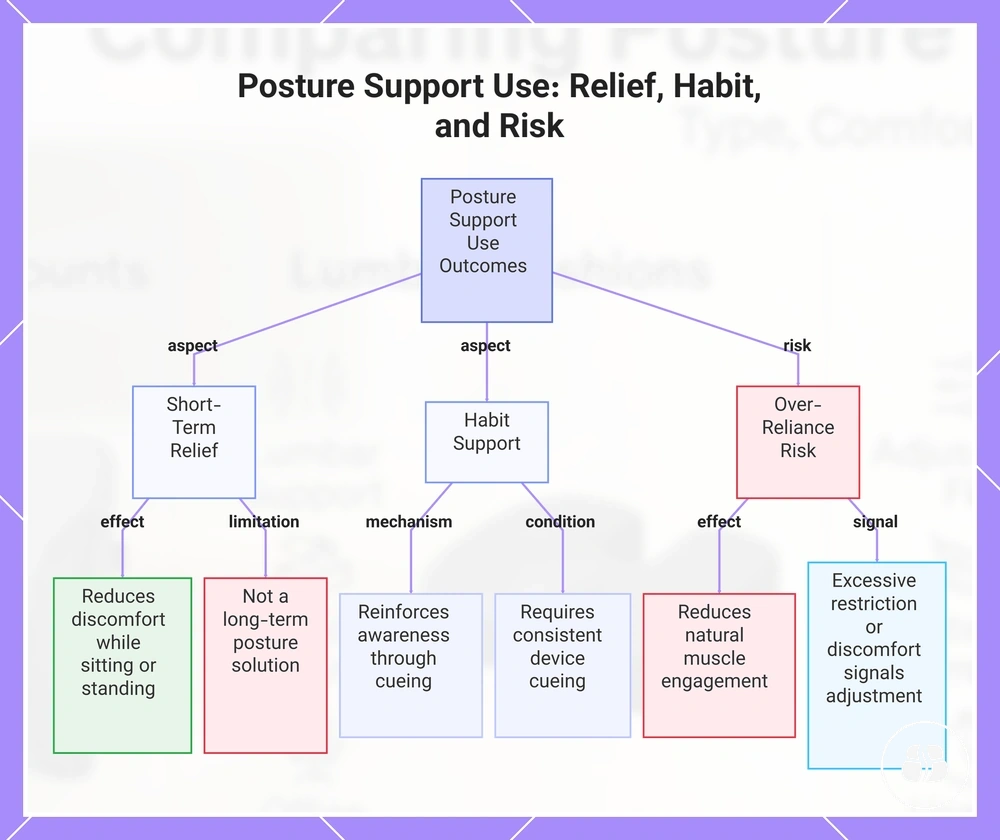
Short-term relief, habit support, and over-reliance risk describe how support behavior changes across posture corrector, back brace, and lumbar support use depending on duration and tolerance. This comparison focuses on how temporary support may improve comfort or awareness while also requiring limits in use to avoid reduced natural posture engagement. The local safety condition is shaped by use limit, discomfort, and restriction levels.
Short-term relief may reduce discomfort during sitting or standing, while habit support can reinforce posture awareness through repeated cueing and alignment feedback. However, excessive restriction or continuous reliance on external support may reduce natural muscle engagement in some use patterns, especially when worn beyond intended duration. In such cases, discomfort, fit, and use limit become important signals for adjusting behavior or considering qualified advice if symptoms persist.
- Short-term relief provides temporary comfort but does not define long-term posture behavior.
- Habit support depends on consistent cueing from posture devices like posture corrector or back brace.
- Over-reliance may develop when support is used continuously without balancing natural movement.
- Discomfort or excessive restriction can indicate that adjustment or reduced use duration is needed.
- Qualified advice may be considered when persistent discomfort or symptoms continue.
This chart shows the three main outcomes of posture support device use—short-term relief, habit support, and over-reliance risk—along with key effects and adjustment signals.
Feature differences that affect practical value
Feature differences that affect practical value depend on how design attributes such as comfort, adjustability, stability, durability, and use-case fit change real usability across posture support accessories. This comparison depends on which feature actually changes support effect rather than simply adding variation, making practical value the main decision variable.
In real use conditions, features like straps, firmness, contour shape, materials, washability, portability, grip, chair stability, and ease of adjustment influence outcomes differently depending on fit and duration of use. For example, higher strap tension may improve stability but reduce comfort, while softer materials may improve comfort but lower support strength. These trade-offs matter only when they directly affect usability, durability, or tolerance during daily use.
Feature differences matter when they change how a posture support accessory performs under real conditions. A feature may look advanced but may not improve outcomes if it does not influence comfort, stability, durability, or support effect in a meaningful way tied to use context.
The table below summarizes how key feature differences translate into practical value:
| Feature | Attribute impact | Practical value effect | Decision relevance |
|---|---|---|---|
| Straps | Adjustability and fit control | Improves stability but may reduce comfort if too tight | Important when support stability is required |
| Firmness | Support level and restriction | Stronger support effect but reduced flexibility | Relevant for posture correction needs |
| Contour shape | Body alignment fit | Can improve support effect depending on body compatibility | Important for seated lumbar alignment |
| Material | Comfort and durability | Affects breathability, comfort, and long-term use | Key for extended use duration |
| Ease of adjustment | Fit flexibility | Improves usability across different users and conditions | Important for shared or changing use |
Adjustability, materials, stability, and ease of use
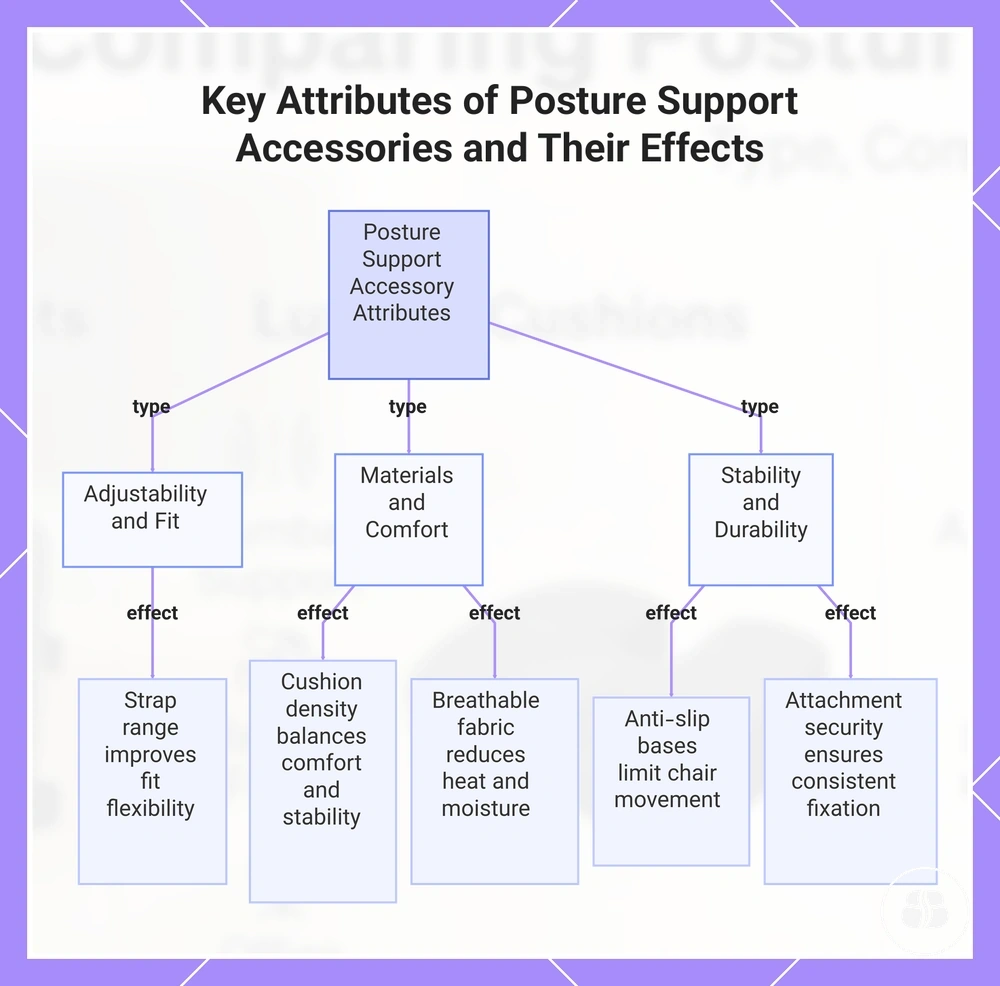
Adjustability, materials, stability, and ease of use define how posture support accessories behave in daily use, where small feature changes can influence comfort, support effect, durability, and practical value. This comparison depends on how each attribute affects fit control, structural reliability, and handling during repeated use conditions.
In real conditions, adjustability determines how well the accessory adapts to different body shapes, while material choice affects comfort and durability under continuous use. Stability controls how securely the support stays in position during movement, and ease of use influences how quickly it can be set up, adjusted, or removed. These attributes together shape whether the accessory feels consistent or requires frequent correction during daily routines.
Key attribute-to-outcome relationships include:
- Strap range adjustability influences fit flexibility and can improve comfort across different body sizes and sitting positions.
- Cushion density affects support effect by balancing softness for comfort and firmness for posture stability.
- Breathable fabric material improves comfort in longer use by reducing heat buildup and moisture retention.
- Anti-slip bases increase stability by limiting unwanted movement on chairs or seating surfaces.
- Attachment security influences durability by affecting how consistently the support remains fixed during use.
- Cleaning needs affect practical value by changing how easily the accessory can be maintained over time.
This chart shows how adjustability, materials, and stability & durability attributes influence fit, comfort, support, and reliability in daily use.
Cost-value trade-offs between posture support categories
Cost-value trade-offs between posture support categories depend on how price range aligns with durability, comfort burden, support function, and expected use frequency. The decision frame is defined by how consistently each posture support accessory delivers support effect relative to its cost-value over time, making use duration and fit the central comparison variables.
In practical use, lower-cost cushions and seat pads often align with short or occasional expected use where comfort burden is light and durability demands are limited. Adjustable correctors and firmer braces introduce higher structural support but may increase comfort burden depending on duration and fit, while chair attachments typically prioritize stable long-term use where consistency matters more than initial price range. These differences matter most when evaluating replacement likelihood and sustained usability across daily routines.
The cost-value comparison below connects accessory type with durability, comfort burden, and expected use to clarify when each category may be sufficient or when higher structural investment may be justified based on use context.
| Option | Cost driver | Trade-off | Value condition |
|---|---|---|---|
| Low-cost cushions | Basic materials and minimal structure | Lower durability and limited long-term support effect | Short or occasional expected use |
| Seat pads | Simple cushioning design | Comfort-focused but higher replacement likelihood over time | Temporary seating comfort needs |
| Adjustable correctors | Strap systems and alignment structure | Moderate comfort burden depending on fit and duration | Regular posture support with adjustable fit needs |
| Firmer braces | Reinforced structural support materials | Higher stability with increased comfort restriction | Sustained posture support and stronger alignment needs |
| Chair attachments | Integrated structural design elements | Higher upfront cost with improved consistency | Extended workstation or daily long-duration use |
The cost-value decision depends on balancing durability, comfort burden, and expected use frequency rather than focusing on price range alone. Lower-cost options may be sufficient for short-term needs, while higher-structure categories may justify their value when long-term stability and consistent support effect are required.
Here are product examples that may make comparison easier. Before buying, always review the compatibility criteria, essential features, and product details.
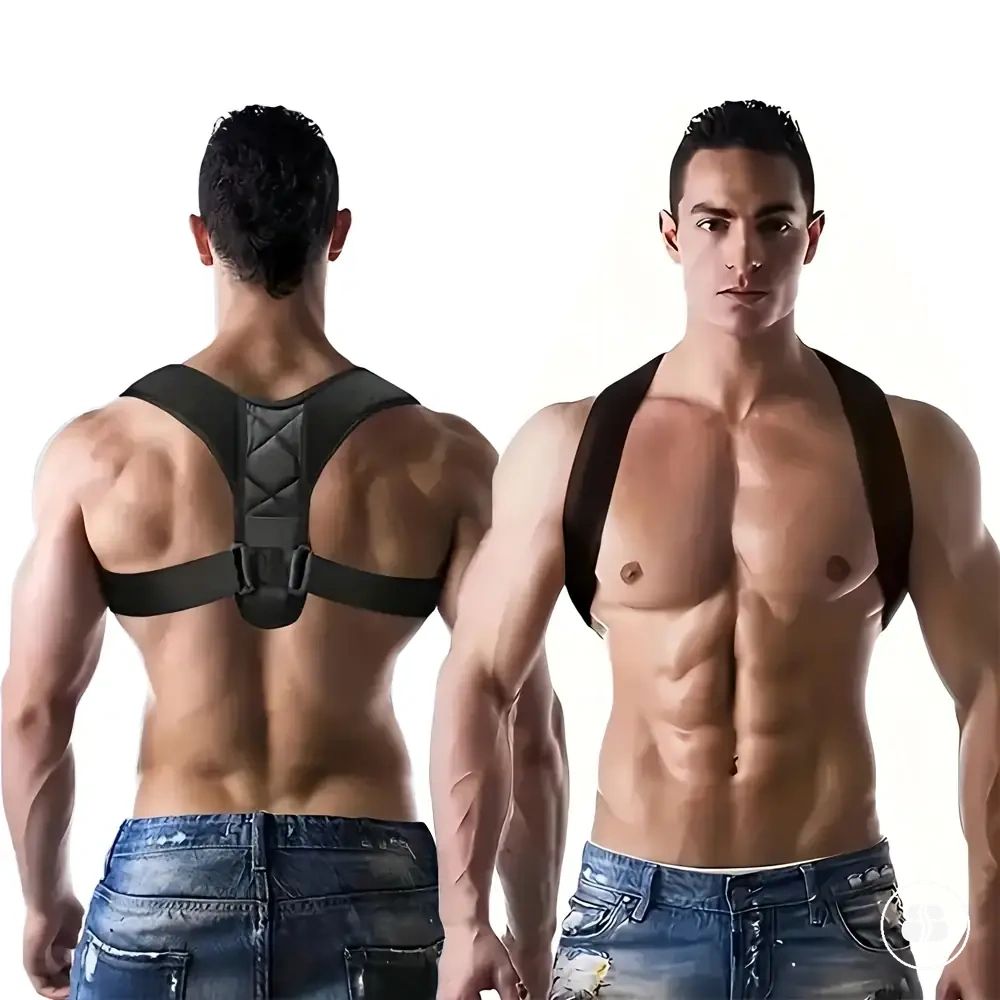
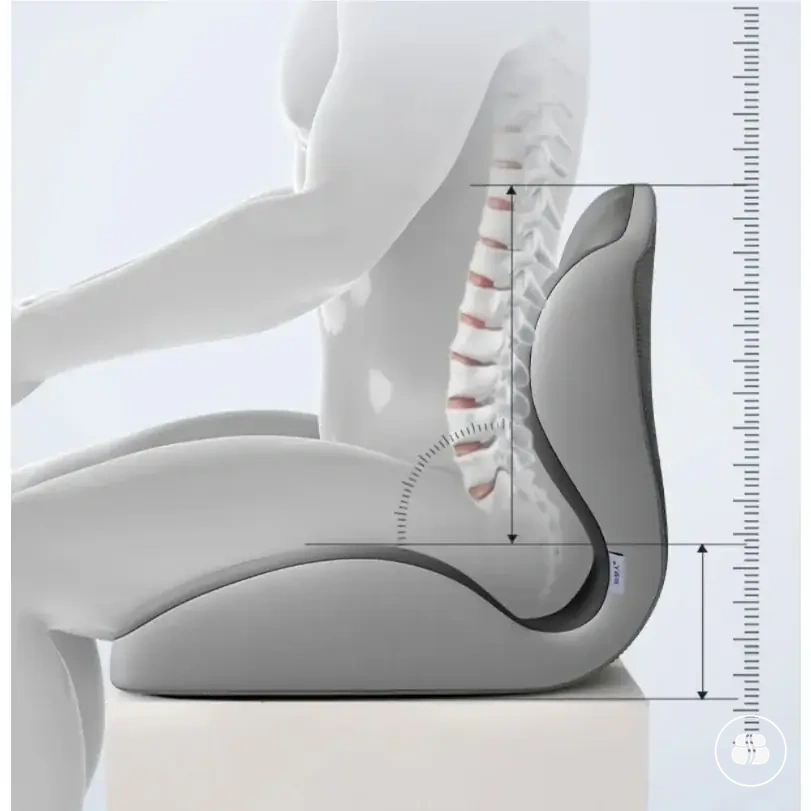
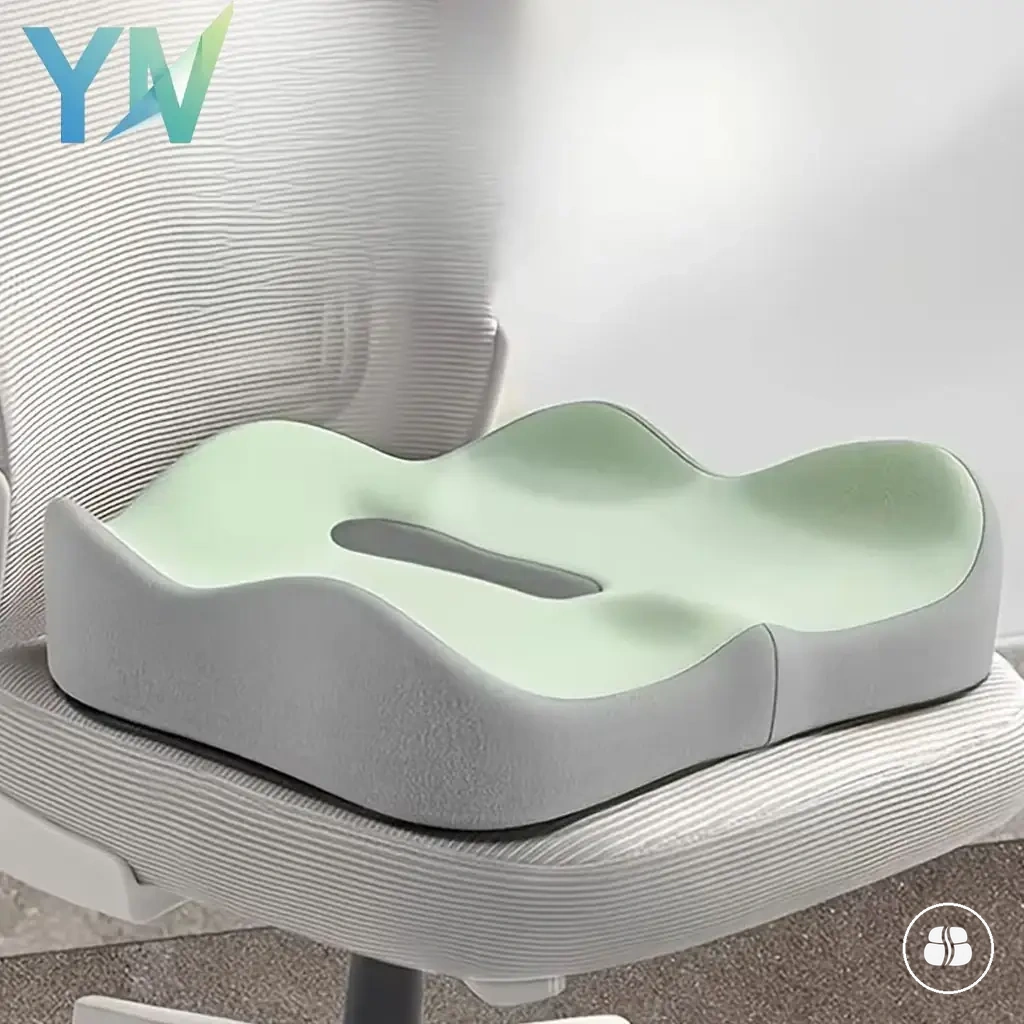
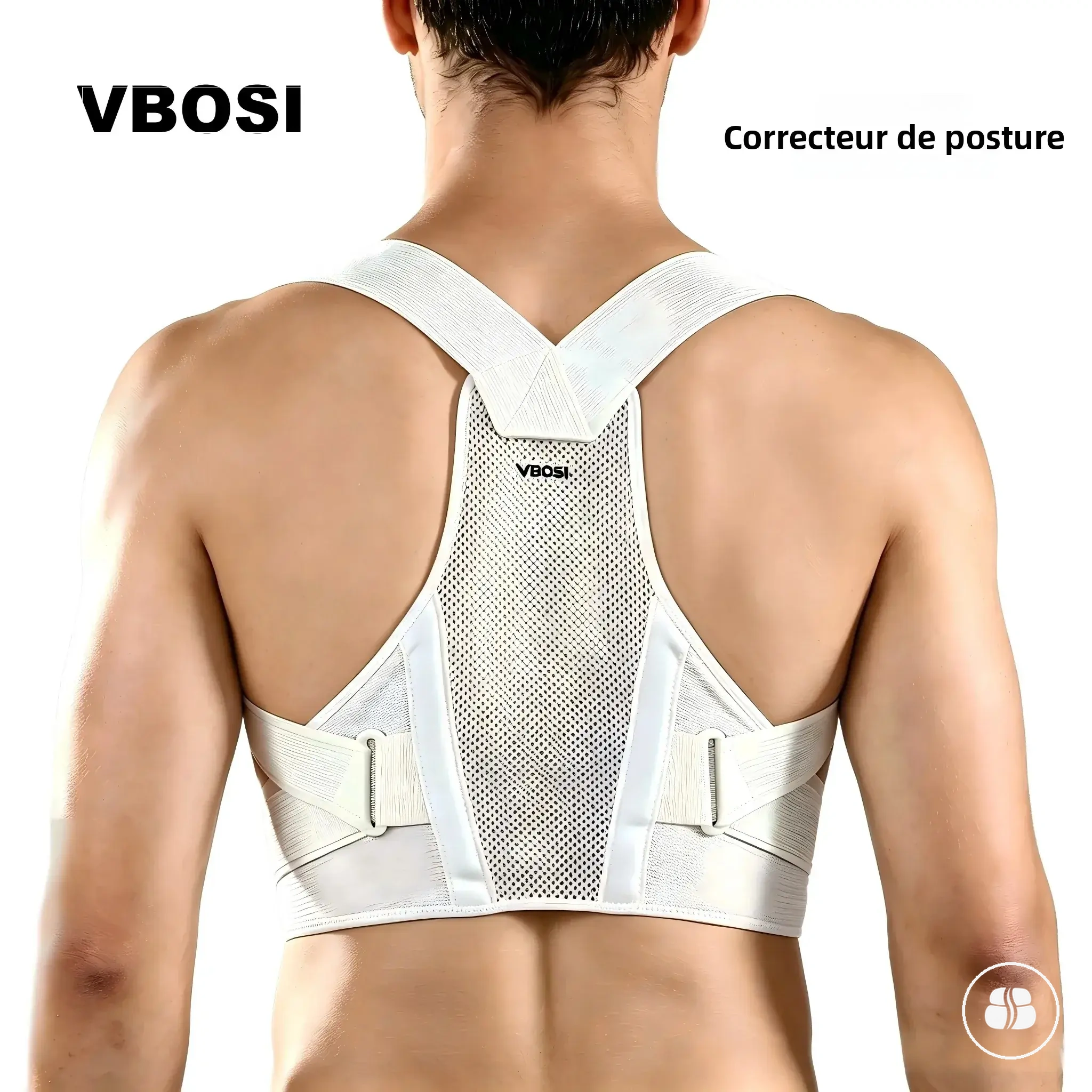
Low-cost supports versus premium wearable correctors
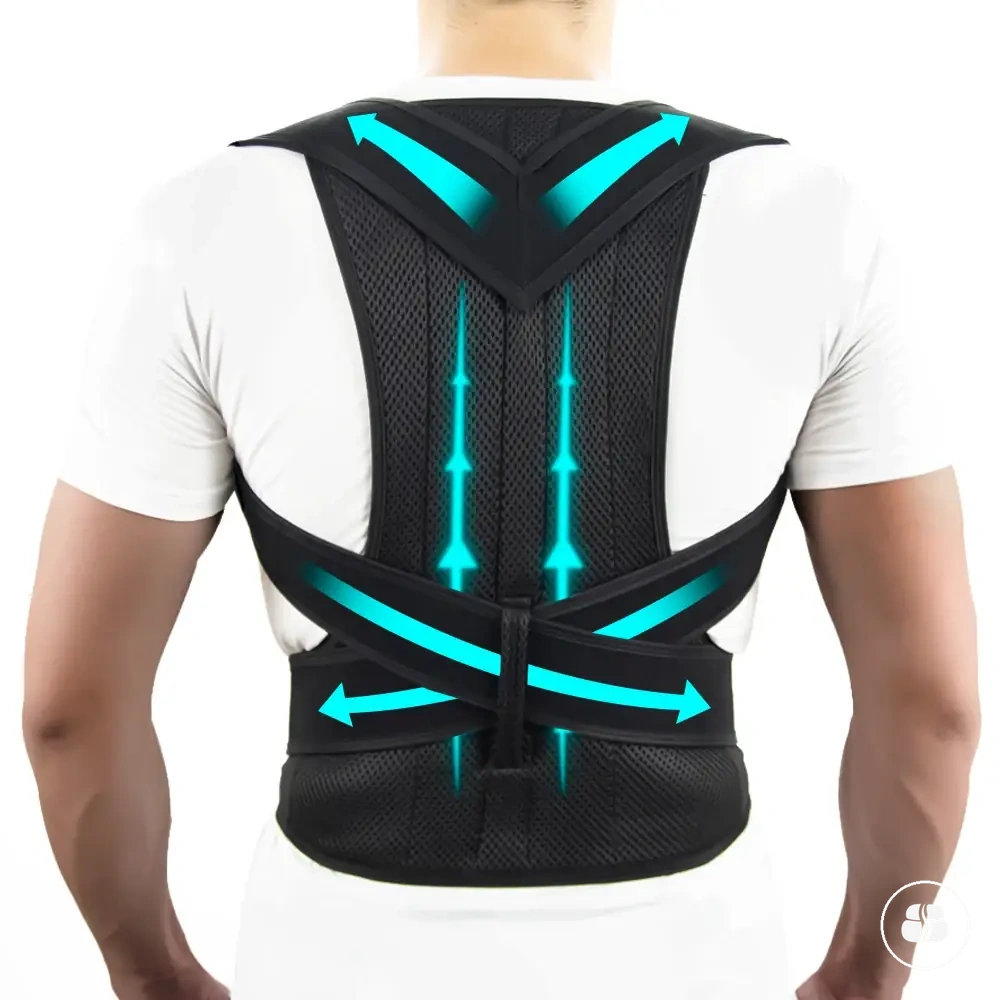
Low-cost supports versus premium wearable correctors differ in cost-value because price range interacts with durability, comfort burden, support effect, and expected use. The comparison depends on whether simpler cushioning and pad-based support is sufficient for limited use or whether structured wearable correction is needed for sustained posture control across longer sessions.
In practical scenarios, cushions and pads typically reduce immediate pressure but may show higher replacement likelihood when used frequently, while posture correctors and firmer wearable braces introduce stronger adjustability and support effect with a higher comfort burden depending on fit and duration. Material strength, strap design, and construction density influence durability and daily compliance, especially when usage becomes consistent. The trade-off remains conditional on expected use frequency and tolerance for restriction rather than price alone.
The contrast below summarizes how low-cost and premium wearable support categories differ in cost-value behavior across key usability attributes.
| Option | Cost driver | Trade-off | Value condition |
|---|---|---|---|
| Low-cost cushions and pads | Simple materials and minimal structural design | Lower durability and limited support effect under repeated use | Occasional or short-duration expected use |
| Posture correctors | Strap systems and adjustable alignment structure | Moderate comfort burden depending on fit and sustained wear | Regular use with moderate correction needs |
| Premium wearable braces | Reinforced materials and structured support design | Higher stability with increased restriction on movement comfort | Extended or continuous posture support requirements |
When each posture support accessory type is the better match
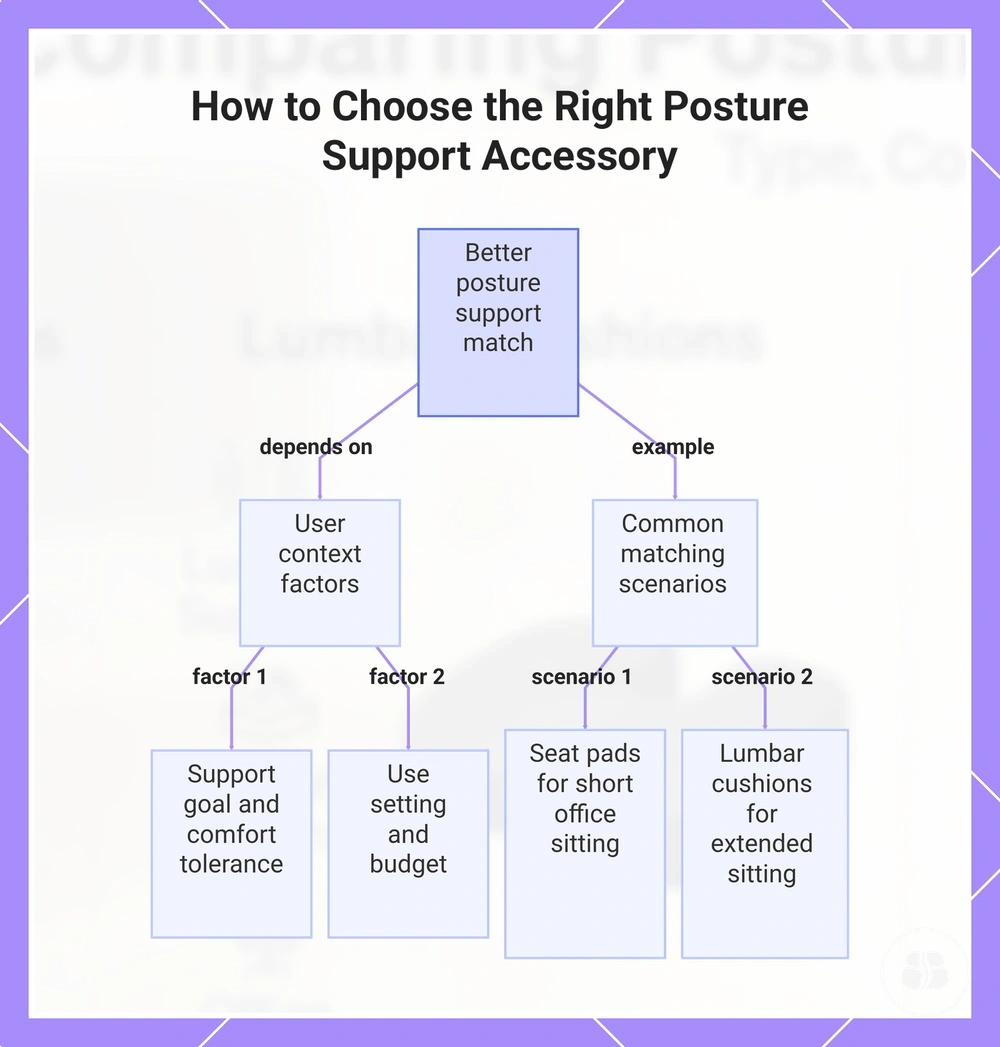
Accessory type choice depends on support goal, comfort tolerance, use setting, and budget. Each posture support option performs differently depending on whether the need is alignment correction, seated comfort, or pressure distribution. The better match decision variable is accessory type aligned with user context. :contentReference[oaicite:0]{index=0}
In daily use, mismatches often appear when support strength or restriction level does not align with how long or how actively the accessory is worn. A posture corrector may feel suitable for awareness but less suitable for long continuous wear, while lumbar cushions or seat pads may improve comfort without changing posture structure. Braces and chair attachments tend to introduce stronger support but may require higher comfort tolerance depending on extended use conditions. Selection remains conditional on expected use duration and sensitivity to restriction.
The checklist below connects real user situations with the posture support accessory type that may be the better match, based on comfort tolerance, use setting, and support goal. These signals help clarify when one category fits better and when reconsideration is needed.
- Short office sitting with mild discomfort → seat pads, because they improve pressure distribution without strong restriction.
- Frequent posture awareness during daily movement → posture correctors, because they provide light alignment cues.
- Extended sitting with lower back pressure → lumbar cushions, because they support seated alignment and comfort balance.
- Need for stronger structural alignment → braces, because they increase support strength with higher restriction.
- Shared workstation use → adjustable chair attachments, because they adapt to different users and setups.
- Low comfort tolerance for restrictive wear → cushions or pads, because they reduce discomfort burden with minimal structure.
- Higher support demand over long hours → braces or structured supports, because they maintain stability under extended expected use.
Final selection depends on aligning accessory type with user context rather than assuming a single universal option fits all needs. For structured guidance, the decision process is expanded in How to choose posture support accessories. The better match is determined by matching support goal, comfort tolerance, use setting, and budget to the accessory’s functional behavior.
This chart shows how the better match for posture support accessories is determined by user context factors and provides example matching scenarios.
Here are product examples that may make comparison easier. Before buying, always review the compatibility criteria, essential features, and product details.